
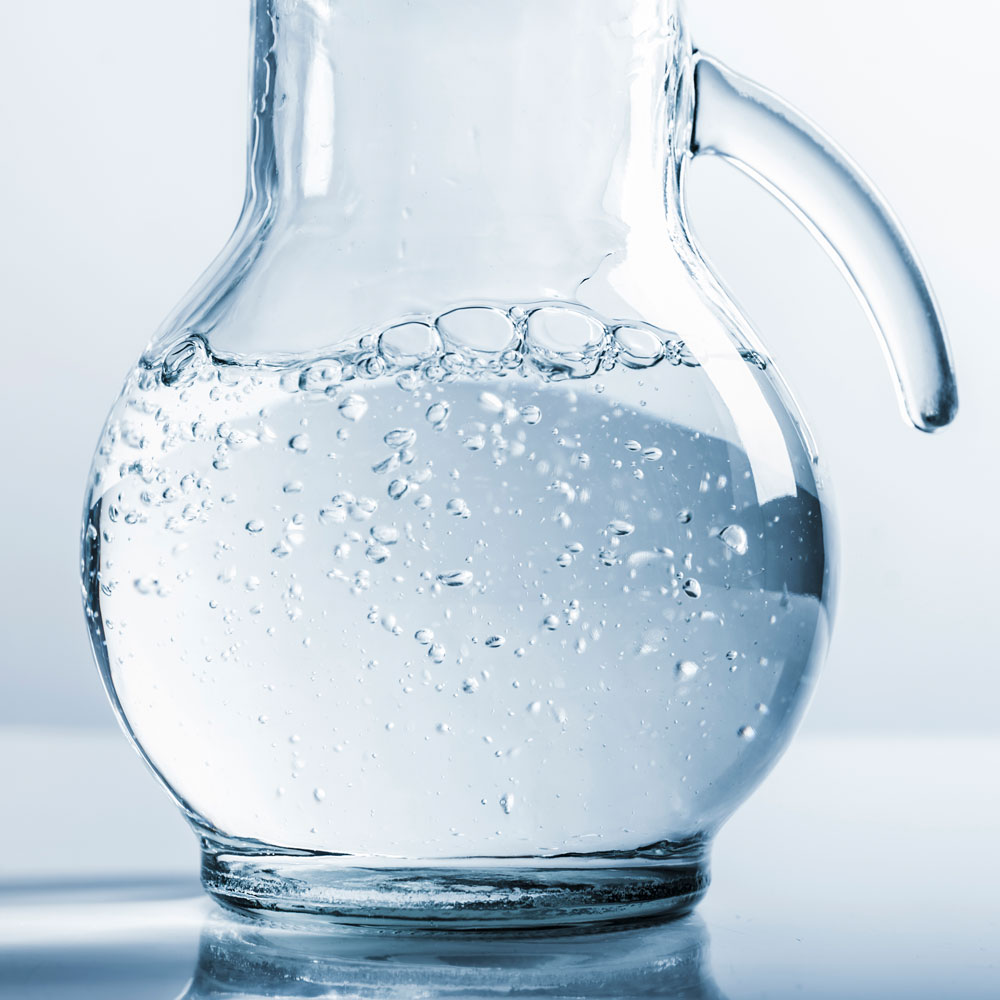
Mono ethylene glycol (also known as MEG, EG, 1,2-ethanediol or 1,2-Dihydroxyethane) is an organic compound with the formula C2H6O2. It is a slightly viscous liquid with a clear, colourless appearance and a sweet taste that emits virtually no odour. It’s miscible with water, alcohols, and many other organic compounds and is primarily used in the industry for manufacturing polyester fibres and as a component in the production of antifreeze, coolants, aircraft anti-icers and de-icers.
Produced
The intermediate ethylene oxide is used to convert ethylene (ethene) into ethylene glycol. Ethylene oxide is obtained through oxidation and is then reacted with water to give mono ethylene glycol with di and tri ethylene glycols as co-products:
C2H4O + H2O → HOCH2CH2OH
Acids and bases can catalyse this reaction, or it can occur at neutral pH under elevated temperatures. Yields of up to 90% can be achieved with acidic or neutral pH with a large excess of water.
Mono ethylene glycol is also manufactured via the hydrogenation of dimethyl oxalate in the presence of a copper catalyst or via the acetoxylation of ethylene.
Global demand for Monoethylene Ethylene Glycol (MEG) is strong with the market worth $25 billion and expected to grow 6% annually to 2024. This is especially due to the increased production of polyethene terephthalate (PET) and the demand for polyesters in the Asia Pacific. Demand is strongest in China where approximately 70% of the world’s MEG output is consumed.
APPLICATIONS
Mono-ethylene Glycol (MEG) can be used for applications that require chemical intermediates for resins, solvent couplers, freezing point depression, solvents, humectants and chemical intermediates. These applications are vital to the manufacture of a wide range of products, including resins; deicing fluids; heat transfer fluids; automotive antifreeze and coolants; water-based adhesives, latex paints and asphalt emulsions; electrolytic capacitors; textile fibers; paper and leather.
Reviews
There are no reviews yet.